How did frantz fanon die
Frantz Omar Fanon was born on 20 July in Fort-de-France, Martinique, which was then part of the French colonial father, Félix Casimir Fanon, worked as a customs officer, while Fanon's mother, Eléanore Médélice, who was of Afro-Caribbean and Alsatian descent, was a shopkeeper. [17]. Frantz Fanon biography. French-speaking West Indian ... Frantz Omar Fanon was born on 20 July 1925 in Fort-de-France, Martinique, which was then part of the French colonial empire.His father, Félix Casimir Fanon, worked as a customs officer, while Fanon's mother, Eléanore Médélice, who was of Afro-Caribbean and Alsatian descent, was a shopkeeper. [17].Frantz Fanon - Internet Encyclopedia of Philosophy 1. The Problem of Blackness. In 1952, Fanon published his first major work Black Skin, White Masks.Though just 27 at the time of its publication, the work displays incredible literacy in major intellectual trends of the time: psychoanalysis, existentialism, phenomenology, and dialectics, as well as, most prominently, the early Négritude movement and U.S. based critical race work in figures.Frantz Fanon - Wikipedia Frantz Fanon (born J, Fort-de-France, Martinique—died December 6, 1961, Bethesda, Maryland, U.S.) was a West Indian psychoanalyst and social philosopher known for his theory that some neuroses are socially generated and for his writings on behalf of the national liberation of colonial peoples. Why is frantz fanon important
Born on the island of Martinique under French colonial rule, Frantz Omar Fanon (–) was one of the most important writers in black Atlantic theory in an age of anti-colonial liberation struggle.
Frantz fanon cia
Frantz Fanon, West Indian psychoanalyst and social philosopher known for his theory that some neuroses are socially generated and for his writings on behalf of the national liberation of colonial peoples. His critiques influenced subsequent generations of thinkers and activists.
Frantz fanon famous works
Frantz Fanon (J–December 6, ) was a psychiatrist, intellectual, and revolutionary born in the French colony of Martinique. Fanon wrote about the effects of colonialism and oppression in books such as “Black Skin, White Masks” and “Wretched of the Earth.”. Frantz fanon theory of postcolonialism
Frantz Fanon was one of the most influential thinkers of the twentieth century. His seminal book, The Wretched of the Earth was completed on his deathbed. (Wikimedia/Grove Press; Reprint. 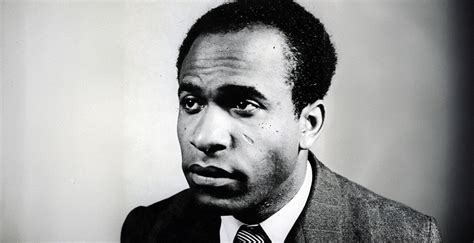
Frantz fanon pdf
French-West Indian psychiatrist, political philosopher, and independence activist Frantz Fanon is remembered for his immense contribution to areas such as Marxism, post-colonial studies, and critical theory. Frantz fanon wife
Frantz Fanon (—) Frantz Fanon was one of a few extraordinary thinkers supporting the decolonization struggles occurring after World War II, and he remains among the most widely read and influential of these voices. Frantz fanon political thought pdf
Frantz Omar Fanon was born on 20 July in Fort-de-France, Martinique, which was then part of the French colonial father, Félix Casimir Fanon, worked as a customs officer, while Fanon's mother, Eléanore Médélice, who was of Afro-Caribbean and Alsatian descent, was a shopkeeper. [17]. Frantz Fanon, West Indian psychoanalyst and social philosopher known for his theory that some neuroses are socially generated and for his. France-Lyne Fanon is the niece of Frantz Fanon. David Macey (5 October 1949 – 7 October 2011) was a historian, biographer and translator. He wrote Frantz Fanon: A Biography.
Born on the island of Martinique under French colonial rule, Frantz Omar Fanon (–) was one of the most important writers in black. Frantz Fanon (J–December 6, 1961) was a psychiatrist, intellectual, and revolutionary born in the French colony of Martinique. Fanon wrote about the effects of colonialism and oppression in books such as “Black Skin, White Masks” and “Wretched of the Earth.”.